Core Exercises That Protect Your Spine
Understanding Anti-Rotation Core Training.
The core exercises that protect your spine.
There is a series of core exercises that protect your spine. Anti-rotation core training represents a fundamental shift in how professionals approach spinal health and functional strength development. Unlike traditional core exercises that focus primarily on forward and backward movements, anti-rotation core training challenges your body to resist rotational forces that commonly cause lower back injuries. This specialized training method has become increasingly relevant for Carmel professionals who spend hours sitting at desks, creating muscular imbalances that leave the spine vulnerable to injury during everyday activities. Research published in the Journal of Strength and Conditioning Research demonstrates that incorporating anti-rotation exercises reduces lower back pain incidence by 47% among office workers who train consistently for twelve weeks.
The spine experiences rotational stress constantly throughout daily life, from carrying groceries with one arm to reaching across your desk for office supplies. However, most people lack the specific strength required to control these rotational forces effectively. When your core cannot resist unwanted rotation, the spine compensates through excessive movement at individual vertebrae, leading to disc problems, facet joint irritation, and muscular strain. Anti-rotation core training addresses this vulnerability by developing the deep stabilizing muscles that act as a protective brace around your spine. Furthermore, this training approach improves athletic performance in activities popular among Carmel residents, including golf, tennis, and recreational basketball, where controlling rotation determines both power output and injury risk.
The Science Behind Rotational Stability
Your core consists of multiple muscle layers working together to protect the spine from harmful movement patterns. The transverse abdominis, internal and external obliques, multifidus, and quadratus lumborum form an integrated system that resists rotation when properly trained. Anti-rotation core training specifically targets these muscles through exercises that challenge your ability to maintain a neutral spine position while external forces attempt to create rotation. This training stimulus differs significantly from traditional sit-ups or crunches, which primarily engage the superficial rectus abdominis without adequately preparing the deeper stabilizers for real-world demands.
Moreover, research from the National Academy of Sports Medicine indicates that rotational control significantly impacts force transfer throughout the kinetic chain. When you cannot resist unwanted rotation at the core, energy leaks occur during movement, reducing efficiency and increasing injury risk at distant sites like the shoulders, hips, and knees. Additionally, studies demonstrate that individuals with stronger anti-rotation capacity generate 23% more power during rotational athletic movements compared to those with weaker stability. This connection between core stability and performance makes anti-rotation core training essential for anyone seeking to optimize their physical capabilities while protecting long-term spinal health.
Essential Anti-Rotation Core Training Exercises
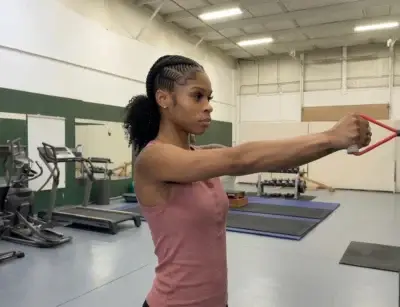
The Pallof press stands as the foundational anti-rotation core training exercise, requiring you to resist band or cable tension that attempts to rotate your torso. To perform this movement, stand perpendicular to a cable machine or resistance band anchor point, hold the handle at chest height with both hands, and press forward while maintaining a completely stable torso position. The resistance continuously tries to pull you toward the anchor point, forcing your obliques and deep core muscles to engage intensely to prevent rotation. Start with three sets of eight repetitions per side, focusing on absolutely zero torso movement rather than maximum resistance. Furthermore, you can progress this exercise by adjusting your stance width, changing your distance from the anchor point, or adding movement patterns like overhead presses or split-stance positions.
Dead bugs with anti-rotation emphasis provide another excellent option for developing rotational stability while lying on your back. Begin by lying supine with arms extended toward the ceiling and knees bent at ninety degrees. As you lower your right arm overhead and extend your left leg, simultaneously resist the natural tendency for your torso to rotate toward the moving limbs. This exercise challenges your ability to maintain perfect alignment while your extremities create rotational forces. Similarly, bird dogs performed on hands and knees require you to extend opposite arm and leg while preventing any spine rotation or hip hiking. These exercises may appear simple, yet they demand intense concentration and muscular control to execute properly.
Landmine rotations offer a dynamic approach to anti-rotation core training by requiring controlled movement through a rotational pattern rather than complete resistance. Stand holding a barbell loaded in a landmine attachment at chest height, then slowly rotate the bar from one side to the other while keeping your hips facing forward. The challenge involves controlling the rotation through your thoracic spine while maintaining stable hips and lumbar spine. This exercise bridges the gap between pure anti-rotation work and functional rotational movements needed for sports and daily activities. Additionally, incorporating suitcase carries, where you walk while holding a heavy weight in one hand, forces your core to resist the lateral flexion and rotation that the uneven load creates.
Progressive Anti-Rotation Core Training Protocols
Beginners should focus on mastering basic anti-rotation positions before adding resistance or complexity to their training. Start with isometric holds like planks with anti-rotation emphasis, where you maintain a perfect plank position while a partner gently attempts to rotate your hips or shoulders. This introduces the concept of resisting external forces without the complexity of movement. Initially, perform these exercises two to three times weekly, allowing adequate recovery between sessions as your stabilizing muscles adapt to the new demands. Progress occurs gradually, with most individuals requiring four to six weeks of consistent training before advancing to more challenging variations.
Intermediate practitioners can increase training intensity through several methods, including extended time under tension, increased resistance, and unstable surface training. For instance, performing Pallof presses while standing on a balance pad or BOSU ball dramatically increases the stability demand on your core muscles. Likewise, incorporating anti-rotation exercises into circuit training formats challenges your ability to maintain stability while fatigued. Research shows that core stability decreases significantly during fatigue, making end-of-workout anti-rotation training particularly valuable for developing real-world functional capacity. Therefore, strategic placement of these exercises throughout your training week maximizes both strength development and injury prevention benefits.
Advanced athletes benefit from incorporating multi-planar anti-rotation challenges that simulate sport-specific demands. This might include performing Pallof presses while simultaneously moving through a lunge pattern or combining anti-rotation holds with upper body pressing movements. These complex exercises require exceptional coordination and core control, preparing your body for the unpredictable demands of athletic competition and daily life. Nevertheless, advancing too quickly through progressions increases injury risk, so working with a personal trainer ensures appropriate exercise selection and execution. Carmel residents have access to experienced trainers at facilities throughout the area, including those near the Monon Trail and Arts & Design District, who can design progressive anti-rotation programs tailored to individual needs and goals.
Common Mistakes in Anti-Rotation Core Training
Many people compromise their anti-rotation core training effectiveness by using excessive resistance before mastering proper form. When the weight or band tension exceeds your stability capacity, you inevitably allow rotation to occur, actually training the opposite of your intended goal. This common error reinforces poor movement patterns and increases injury risk rather than building protective strength. Instead, select resistance that allows perfect form for all prescribed repetitions, even if this means using surprisingly light loads initially. Quality of movement always supersedes quantity of resistance in anti-rotation training.
Breathing dysfunction represents another critical mistake that undermines training benefits. Holding your breath during anti-rotation exercises creates excessive intra-abdominal pressure and prevents proper muscle activation patterns. Instead, practice controlled breathing throughout each repetition, exhaling during the most challenging portion of the movement while maintaining core tension. This breathing pattern takes practice but significantly enhances training effectiveness and transfers better to real-world applications where you cannot hold your breath during physical tasks.
Furthermore, neglecting exercise variety limits long-term progress in rotational stability development. Your core must resist rotation in standing, kneeling, lying, and moving positions to provide comprehensive spinal protection. Training in only one position or with one exercise pattern leaves gaps in your stability capabilities. Therefore, incorporate multiple anti-rotation exercises addressing different positions and movement patterns throughout each training week. This approach ensures balanced development of all the muscles contributing to rotational control.
Integrating Anti-Rotation Work into Complete Training Programs
Anti-rotation core training functions most effectively when integrated strategically into comprehensive exercise programs rather than performed in isolation. Many trainers recommend beginning workouts with lighter anti-rotation exercises as part of movement preparation, activating the stabilizing muscles before more demanding exercises. This approach primes your nervous system for stability and reduces injury risk during compound movements like squats, deadlifts, and overhead pressing. Alternatively, placing anti-rotation exercises between major strength movements provides active recovery while maintaining core engagement throughout your session.
The frequency of anti-rotation core training depends largely on your current fitness level, training goals, and overall program demands. Most individuals benefit from two to four anti-rotation sessions weekly, with each session including three to five different exercises. However, athletes in rotational sports like golf or tennis might emphasize this training more heavily, potentially incorporating some anti-rotation work into daily warm-up routines. Conversely, if you experience lower back discomfort, temporarily increasing anti-rotation training frequency often provides rapid improvement in symptoms as your stability improves.
Periodization principles apply to anti-rotation core training just as they do to other strength training components. During preparatory training phases, emphasize higher volume with moderate intensity, performing more sets and repetitions with lighter resistance. As you transition into more intensive training phases, reduce volume while increasing resistance and complexity. This cyclical approach prevents adaptation plateaus while managing fatigue accumulation. Working with a personal trainer helps optimize these programming variables based on your individual response to training and specific performance goals.
Anti-Rotation Core Training for Special Populations
Pregnant women can safely perform most anti-rotation core training exercises with appropriate modifications throughout pregnancy. These exercises help maintain core strength and stability during the significant physical changes of pregnancy, potentially reducing lower back pain and improving postpartum recovery. However, avoid exercises performed lying flat on your back after the first trimester, instead choosing standing or side-lying variations. The Pallof press, standing anti-rotation holds, and modified bird dogs all provide excellent options for maintaining core function throughout pregnancy. Nevertheless, always consult with your healthcare provider and work with a personal trainer experienced in prenatal fitness to ensure exercise safety and effectiveness.
Older adults particularly benefit from anti-rotation core training as rotational control often deteriorates with age, contributing to fall risk and functional decline. Research demonstrates that adults over sixty who perform regular anti-rotation exercises show significant improvements in balance, gait stability, and confidence during daily activities. These exercises should emphasize controlled movement quality rather than heavy resistance, focusing on developing the mind-muscle connection necessary for effective core engagement. Additionally, incorporating anti-rotation exercises into group fitness classes at Carmel’s senior centers and fitness facilities creates social support while building essential stability.
Individuals recovering from lower back injuries frequently receive anti-rotation core training prescriptions from physical therapists and rehabilitation specialists. These exercises rebuild the neuromuscular control often disrupted by injury while avoiding the spinal loading that might aggravate healing tissues. Starting with very gentle anti-rotation challenges, like simply maintaining a neutral spine while breathing deeply, progresses gradually to more demanding exercises as healing occurs. This methodical approach helps prevent re-injury while restoring full functional capacity. Therefore, if you have a history of back problems, seeking guidance from qualified professionals ensures your anti-rotation training supports rather than hinders your recovery.
Technical Aspects of Anti-Rotation Core Training
Understanding proper breathing mechanics during anti-rotation core training significantly impacts exercise effectiveness and safety. The 360-degree breathing technique, where you expand your ribcage and abdomen in all directions during inhalation, creates optimal intra-abdominal pressure for spinal stability. As you exhale during the challenging portion of anti-rotation exercises, maintain this circumferential tension rather than completely relaxing your core. This breathing pattern requires practice but eventually becomes automatic, providing superior spinal protection during both training and daily activities. Research from the International Journal of Sports Physical Therapy confirms that proper breathing patterns during core training improve force production by 18% while reducing perceived exertion.
Neutral spine alignment represents the ideal position for most anti-rotation core training exercises, referring to the natural curves of your spine rather than a completely flat back. Your lumbar spine should maintain a slight lordotic curve, your thoracic spine a slight kyphotic curve, and your cervical spine its natural lordosis. During anti-rotation exercises, focus on preserving these natural curves rather than forcing your spine into unnatural positions. Use mirrors or work with a personal trainer to develop awareness of neutral spine positioning, as this skill transfers directly to injury prevention during daily activities and other training movements.
Muscle activation patterns during anti-rotation exercises differ significantly from traditional core training. Electromyography studies reveal that exercises like the Pallof press activate the internal and external obliques at 85-95% of maximum voluntary contraction, substantially higher than activation during sit-ups or crunches. The transverse abdominis, your deepest core muscle, shows particularly high activation during anti-rotation work, functioning as the primary stabilizer against rotational forces. Additionally, the multifidus muscles along your spine engage intensely to prevent vertebral rotation, creating segmental stability that protects individual spinal joints. Understanding these activation patterns helps you appreciate why anti-rotation training provides superior functional benefits compared to more traditional core exercises.
Measuring Progress in Anti-Rotation Strength
Tracking progress in anti-rotation core training requires different metrics than traditional strength training, as the goal involves resisting movement rather than creating it. One effective assessment involves timing how long you can maintain perfect form during isometric anti-rotation holds, with progressions occurring when you can sustain proper position for sixty seconds or longer. Additionally, monitoring the resistance level at which you can perform exercises with flawless technique provides objective progress markers. For example, progressing from a light resistance band to a medium band on Pallof presses indicates improved anti-rotation capacity.
Functional assessments also demonstrate anti-rotation training benefits in real-world contexts. Many people notice reduced lower back discomfort during prolonged sitting, easier performance of unilateral tasks like carrying groceries, and improved athletic performance in rotational sports. These subjective improvements often motivate continued training more effectively than abstract strength measures. Furthermore, videoing your exercise performance periodically allows you to observe form improvements that might not be apparent during training sessions. Comparing videos from early training to current performance often reveals dramatic improvements in stability and control that build confidence and motivation.
Working with a personal trainer provides expert assessment of your anti-rotation strength development and helps identify areas requiring additional focus. Trainers can detect subtle compensatory movements that you might not notice independently, ensuring your training translates to actual functional improvements rather than reinforcing poor patterns. Moreover, trainers adjust programming variables based on your individual progress rate, preventing both under-training and overtraining scenarios. This personalized approach maximizes training efficiency while minimizing injury risk throughout your fitness journey.
Long-Term Benefits and Injury Prevention
Consistent anti-rotation core training provides cumulative benefits that extend well beyond immediate strength improvements. Over months and years, this training fundamentally changes how your nervous system controls spinal stability, creating automatic protective responses during unexpected movements or external forces. This neurological adaptation may represent the most valuable benefit of anti-rotation training, as it protects your spine even when you’re not consciously engaging your core. Research tracking individuals over two-year periods shows that those maintaining regular anti-rotation training experience 73% fewer lower back injuries compared to control groups performing traditional core exercises.
The preventive value of anti-rotation core training becomes increasingly important as you age and spinal tissues naturally lose some resilience. By building robust rotational control during your thirties, forties, and fifties, you establish protective mechanisms that preserve function and independence into your later decades. Many Carmel residents who begin anti-rotation training in midlife report maintaining active lifestyles involving golf, tennis, and recreational sports well into their seventies and eighties, attributing this longevity to their consistent focus on core stability. Therefore, viewing anti-rotation training as a long-term investment in spinal health rather than a short-term fitness trend helps maintain motivation and consistency.
Conclusion
Anti-rotation core training protects your spine through targeted exercises that build resistance against unwanted rotational movement, providing benefits that extend far beyond traditional core training approaches. By incorporating exercises like Pallof presses, dead bugs with anti-rotation emphasis, and landmine rotations into your training program, you develop the deep stabilizing muscles essential for spinal health and functional performance. These exercises challenge your core in ways that directly transfer to daily activities and athletic pursuits, making them particularly valuable for busy Carmel professionals seeking efficient, effective training strategies. The progressive nature of anti-rotation training ensures continued adaptation and improvement regardless of your starting fitness level.
Working with a personal trainer helps optimize your anti-rotation core training through proper exercise selection, technique coaching, and program design tailored to your individual needs and goals. Trainers provide the expertise necessary to progress safely through increasingly challenging variations while avoiding common mistakes that compromise training effectiveness. Whether you’re recovering from a previous back injury, seeking to prevent future problems, or aiming to enhance athletic performance, anti-rotation core training offers proven benefits supported by extensive research and practical application. Start incorporating these exercises into your routine today to build the rotational stability that protects your spine and enhances every aspect of your physical performance.