Why the Way You Breathe Affects Your Core.
Breathing Mechanics
How Breathing Builds Core Stability
Most people walk into a gym thinking about their abs, their glutes, or their lower back. Nobody walks in thinking about their diaphragm. Yet breathing mechanics training may be the most overlooked piece of genuine core stability, and understanding it changes everything about how you move, lift, and feel throughout the day. If you have ever been told to brace your core and had no idea what that actually meant, this is where that answer lives.
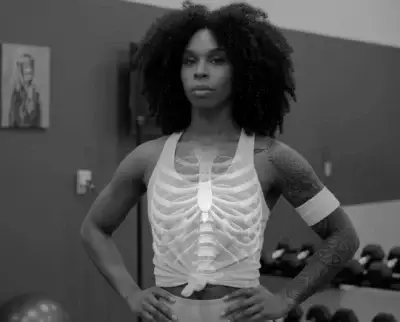
Your Core Is Not What Most People Think It Is
When most people hear the word core, they picture the six-pack muscles. Those are the showroom muscles. The real stability system runs deeper and works as a sealed pressure chamber. Picture a cylinder: the diaphragm forms the top, the pelvic floor forms the bottom, the transverse abdominis wraps around the middle like a corset, and the multifidus muscles line the back of the spine. These four work together. When you inhale correctly, your diaphragm descends, pressure builds inside that chamber, and your spine gets braced from the inside out.
That internal pressure is called intra-abdominal pressure, and it acts like a natural weight belt. No equipment required. The catch is that most adults have learned to breathe in a way that bypasses this system entirely. Hours at a desk, chronic stress, and tight clothing all train the body to breathe shallow and high, from the chest instead of the belly. When that happens, the diaphragm stops moving through its full range, the pressure system collapses, and the spine is left to fend for itself.
What 360-Degree Breathing Actually Means
Breathing mechanics training begins with a concept called 360-degree breathing. The goal is simple: when you inhale, your entire torso should expand outward in every direction, front, sides, and back. Not just your chest. Not just your belly. Everything. Think of your ribcage as a barrel inflating evenly rather than a balloon popping forward.
A client of mine, a software engineer in his mid-forties, had dealt with nagging lower back discomfort for years. He had tried everything from stretching to massage. When we assessed his breathing, he was drawing every breath into his upper chest while his belly barely moved. Within three weeks of dedicated breathing mechanics training, his back discomfort had dropped significantly. He had not changed a single exercise in his routine. Only his breathing. The spine was finally getting the internal support it had been missing.
Breathing Mechanics Training and Spinal Protection
Research published in the Journal of Orthopedic and Sports Physical Therapy has consistently shown that people with chronic lower back pain exhibit measurably altered diaphragm function and reduced movement through their breathing pattern. The spine is not suffering from weak abs. It is suffering from a failed pressure system. Breathing mechanics training corrects the source rather than patching the symptom.
The multifidus muscles, the small stabilizers that attach directly to each vertebra, depend on coordinated breathing to activate properly. When diaphragm function is impaired, these muscles go quiet. Studies on individuals with back pain show reduced multifidus activation as a consistent finding. Restoring proper breathing does not require isolated exercises for these muscles. Fix the breath, and they wake back up on their own. That is the elegance of working with the body the way it was designed to work.
Timing Your Breath During Strength Training
The popular advice to breathe out on the hard part is well-intentioned but incomplete. For light movements, it works fine. For heavier compound lifts like squats, deadlifts, or overhead pressing, it leaves your spine unnecessarily exposed. Breathing mechanics training teaches a different strategy: breathe in before you begin, hold that pressurized brace through the demanding portion, and release only once the rep is complete and the load is controlled.
Over the years, I have seen this principle make an immediate difference for clients who felt unstable or uncomfortable under a loaded bar. The issue was rarely weak legs or a tight hip. It was a spine that had no internal support because the pressure system was never primed. A knowledgeable personal trainer will watch your breathing before they watch your form, because your breath determines whether the rest of your technique can hold up under load.
Breathing Mechanics Training and Your Posture
Poor posture and dysfunctional breathing feed each other in a loop. Rounded shoulders compress the ribcage, limiting how far the diaphragm can descend. That forces shallow breathing. Shallow breathing then fails to support the spine, which leads to more slouching and more compression. Breathing mechanics training breaks that loop by restoring diaphragm range of motion, which naturally encourages the ribcage to lift and the shoulders to settle back. Better posture starts to feel effortless rather than forced because the body finally has the structural support it needs.
The pelvic floor is part of this same story. These muscles form the base of the pressure cylinder and should gently yield during inhalation and engage during exhalation. Many adults, particularly those who have experienced injury or surgery, hold chronic tension here that disrupts the entire system. A skilled personal trainer with experience in breathing mechanics training can help you identify and release that pattern without any complicated or uncomfortable work.
Try This: The Wall Breathing Reset
Stand with your back against a wall. Your head, upper back, and the back of your pelvis should all be in contact with the surface. Let your feet settle about six inches from the wall. Now place both hands on the sides of your ribcage, fingers pointing forward.
Breathe in slowly through your nose for four counts. Your goal is to feel your hands push outward as your ribcage expands sideways. Do not let your shoulders rise or your chest push forward. Then exhale fully through pursed lips for six counts, feeling your ribcage gently recoil. Repeat this ten times. That is 360-degree breathing. Practice it in this position every day for one week before moving to seated or standing. Most people feel a meaningful shift in their posture and lower back comfort within days.
Breathing Mechanics Training in Daily Life
Structured workouts are where you practice the skill. Daily life is where it pays off. If you sit for long hours, your breathing pattern will gradually drift back toward shallow and high unless you interrupt it intentionally. Setting a simple hourly reminder to check your breath for thirty seconds costs nothing and has a measurable impact on spinal fatigue by end of day. Many of my clients in Carmel, Indiana, who work demanding professional schedules have found this single habit more effective for back comfort than anything they had previously tried.
The nervous system benefits extend beyond the physical. Slow diaphragmatic breathing activates the parasympathetic nervous system through the vagus nerve, which connects the diaphragm directly to the brain. Regular breathing mechanics training measurably reduces resting cortisol levels and improves recovery between training sessions. People who practice it consistently report sleeping better, managing stress more calmly, and feeling less physically depleted at the end of demanding days. The breath is an entry point into the entire nervous system.
Common Mistakes and How to Avoid Them
The most common mistake in breathing mechanics training is trying too hard. This is not a forceful practice. If you feel tension in your neck, shoulders, or jaw while working on your breathing pattern, you are overdoing it. The breath should feel like an expansion, not a performance. Back the effort down until the movement feels smooth and natural, then gradually build awareness from there.
The second mistake is holding high pressure constantly. Creating strong intra-abdominal pressure is appropriate under a heavy bar or during a demanding movement. It is not appropriate while walking to your car or sitting at your desk. Breathing mechanics training teaches modulation, knowing when to brace and when to breathe freely. Holding constant tension is exhausting and ultimately counterproductive. True mastery is in the transition between states, not in staying braced all day.
Working with a Personal Trainer on Breathing
You can begin breathing mechanics training on your own with the wall exercise above. But a qualified personal trainer accelerates the process considerably because they observe movement patterns you cannot see in yourself. A good trainer watches the ribcage, the belly, the shoulders, and the timing between inhalation and movement. They catch compensations early before they become habits. The difference between practicing alone for six months and working with a skilled personal trainer for six weeks is often dramatic.
A dear friend who trains with me is a retired attorney in her early sixties. She came in with significant lower back stiffness and a history of two minor disc injuries. Her previous trainers had focused entirely on strengthening the muscles around the injury. When we addressed her breathing mechanics, her movement quality changed within weeks. She now trains with confidence and without the hesitation that had shadowed her workouts for years. The back is often the symptom. The breath is often the solution.
If you are ready to address the root of core stability rather than its surface, Mobility360.fit in Carmel, Indiana is where that work happens. The breath is where every strong, resilient, pain-free movement begins.