Farmer’s Walk Training Transforms Grip Strength
Introduction: The Overlooked Foundation of Functional Fitness
Grip strength serves as a remarkable predictor of overall health and longevity, yet many fitness enthusiasts overlook this fundamental aspect of physical conditioning. The farmer’s walk training represents one of the most effective methods for developing grip strength while simultaneously building core stability, cardiovascular endurance, and full-body coordination. This deceptively simple exercise involves carrying heavy loads in each hand while walking for distance or time, mimicking the practical movement patterns our ancestors used daily. Research published in The Lancet demonstrates that grip strength correlates strongly with cardiovascular health, with each 5-kilogram decrease in grip strength associated with a 16% increased risk of all-cause mortality. For professionals aged 35-60 in Carmel, Indiana, who spend considerable time at desks or in sedentary positions, farmer’s walk training offers a comprehensive solution that addresses multiple fitness components through a single, efficient movement pattern.
Understanding Grip Strength and Its Impact on Daily Life
Grip strength extends far beyond the ability to open stubborn jar lids or carry grocery bags from the car. This fundamental component of physical fitness influences everything from bone density and muscular endurance to cognitive function and independence in later years. The hand contains 27 bones, 29 joints, and at least 34 muscles that work in concert to create various grip patterns, each serving distinct functional purposes. A strong grip correlates with better outcomes in activities ranging from golf swings to keyboard typing, from lifting grandchildren to managing yard work around Carmel’s beautiful neighborhoods. Studies from the American Journal of Medicine reveal that individuals with stronger grip strength demonstrate better cognitive performance, reduced risk of falls, and greater independence as they age. Personal trainers recognize that grip strength often becomes the limiting factor in many compound exercises, preventing clients from fully engaging larger muscle groups during pulling movements, deadlifts, and carrying tasks that would otherwise provide significant strength and conditioning benefits.
The Comprehensive Benefits of Farmer’s Walk Training
Farmer’s walk training delivers remarkable benefits that extend throughout the entire body, making it one of the most efficient exercises for time-conscious professionals. This movement pattern strengthens the hands, forearms, shoulders, core, and legs simultaneously while challenging cardiovascular capacity and mental toughness. The sustained isometric contraction required to maintain grip on heavy loads stimulates significant muscular endurance adaptations in the forearms and hands, increasing both crushing grip strength and support grip strength. Research from the Journal of Strength and Conditioning Research indicates that loaded carries like farmer’s walks significantly improve core stability by forcing the trunk muscles to resist lateral flexion, rotation, and extension while maintaining an upright posture under load. The exercise also enhances shoulder girdle stability as the rotator cuff and scapular stabilizers work continuously to maintain proper positioning against the downward pull of the weights. Additionally, farmer’s walks develop functional strength that transfers directly to daily activities, from carrying luggage through Indianapolis International Airport to moving furniture or managing home improvement projects. The cardiovascular demands of walking with heavy loads create metabolic stress that improves work capacity and conditioning without the joint impact associated with running or jumping.
Essential Technique and Form for Farmer’s Walk Training
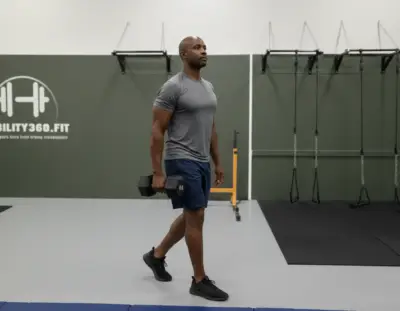
Proper execution of farmer’s walks requires attention to several critical technique elements that maximize benefits while minimizing injury risk. Begin by selecting appropriate implements, whether dumbbells, kettlebells, farmer’s walk handles, or hex bars, ensuring the weight challenges your grip without compromising form throughout the intended distance or duration. Stand between the weights with feet hip-width apart, hinge at the hips to reach down, and grip each implement firmly in the center to ensure balanced loading. Before lifting, engage your core by taking a deep breath and bracing your midsection, then stand up using your legs while keeping your spine neutral and shoulders pulled back and down. Once upright, maintain a tall posture with your chest up, shoulders packed into their sockets, and eyes focused forward rather than down at the ground. Walk with deliberate, controlled steps, avoiding the temptation to rush or allow the weights to swing excessively. Your arms should hang straight down with minimal swaying, and your torso should resist any lateral tilting or rotation. Personal trainers emphasize the importance of maintaining consistent breathing throughout the movement, as holding your breath can elevate blood pressure dangerously and reduce performance. When fatigue begins to compromise your grip or posture, carefully set the weights down using proper lifting mechanics rather than dropping them or allowing technique to deteriorate. This attention to form ensures that farmer’s walks remain a safe, effective training tool rather than a source of injury.
Progressive Programming Strategies for Maximum Results
Implementing farmer’s walk training effectively requires thoughtful progression that respects individual capacity while consistently challenging the neuromuscular system. Beginners should start with relatively light loads, perhaps 25-40% of bodyweight per hand, focusing on mastering proper posture and breathing patterns over distances of 20-30 yards. As technique becomes consistent and confidence builds, increase either the load, distance, or both in small increments of 5-10% to ensure sustainable progress without overwhelming the grip or compromising form. Intermediate trainees might progress to carrying 40-60% of bodyweight per hand for distances of 40-80 yards, while advanced individuals can challenge themselves with loads exceeding bodyweight per hand or incorporating variations like uneven loads or unstable implements. Time-based protocols offer an alternative progression method, starting with 30-second carries and gradually extending to 60-90 seconds as grip endurance improves. Consider incorporating farmer’s walks 2-3 times weekly, allowing adequate recovery between sessions since the intense grip work and systemic demands require 48-72 hours for full recovery. Many personal trainers structure farmer’s walk progression using wave loading patterns, alternating between heavier loads for shorter distances and lighter loads for longer distances to develop both maximal grip strength and muscular endurance. The key lies in tracking performance consistently, recording loads, distances, and times to ensure measurable progress and identify when additional progression becomes appropriate. Recovery nutrition and adequate hand and forearm care between sessions support continued adaptation and reduce the risk of overuse injuries.
Variations and Adaptations for Different Goals
Farmer’s walk training offers numerous variations that target specific aspects of grip strength, stability, and conditioning. The single-arm farmer’s carry intensifies core stabilization demands by creating an asymmetrical load that forces the obliques and lateral stabilizers to work harder to maintain upright posture. Suitcase carries use this same single-arm loading but emphasize resisting lateral flexion, developing tremendous core strength that transfers to activities requiring unilateral strength. Overhead carries challenge shoulder stability and thoracic mobility while still providing significant grip work, though the lighter loads mean less direct grip stimulus compared to standard farmer’s walks. Trap bar carries allow for heavier loading due to the centered grip position and neutral spine alignment, making them ideal for developing maximal grip strength. For those with limited space, stationary farmer’s holds provide similar grip benefits by simply holding heavy implements for time without walking, though they eliminate the additional stability challenges created by locomotion. Uneven carries, using different weights in each hand, create unique stabilization demands and help identify and address strength asymmetries between sides. Personal trainers often prescribe alternating farmer’s walks and overhead carries within the same session to develop comprehensive shoulder and grip strength across multiple positions. For clients dealing with specific limitations, such as recent shoulder injuries or mobility restrictions, modified versions using lighter loads, shorter distances, or neutral-grip implements allow continued training while respecting healing tissues and building capacity gradually.
Integration with Comprehensive Fitness Programming
Farmer’s walk training integrates seamlessly into various training programs and fitness goals when positioned appropriately within workout structure. For strength-focused programs, program farmer’s walks after primary compound lifts like squats, deadlifts, and presses, when technique for those movements remains sharp but additional volume can be accumulated without compromising form. The carries then serve as excellent finishers that develop work capacity while providing supplemental grip and core training. In conditioning-focused programs, farmer’s walks can serve as one station within circuit training or as intervals paired with periods of rest or active recovery. The metabolic demands make farmer’s walks particularly effective for fat loss goals, as they create significant energy expenditure while building lean muscle tissue that increases resting metabolic rate. Athletes preparing for sports involving running or cutting movements benefit from incorporating farmer’s walks into their programming since the exercise develops the core stability and anti-rotation strength necessary for maintaining efficiency during rapid direction changes. Personal trainers working with clients preparing for physical jobs or functional challenges often use farmer’s walks as a primary movement pattern, gradually increasing loads and distances to build the specific work capacity their daily activities demand. For general fitness clients, farmer’s walks provide an efficient method for developing multiple fitness qualities simultaneously, making them valuable additions to time-efficient training programs. Recovery considerations matter significantly, as the systemic demands and grip fatigue generated by farmer’s walks can impact performance in subsequent upper-body training sessions if not properly managed.
Common Mistakes and How to Avoid Them
Several technical errors commonly compromise the effectiveness and safety of farmer’s walk training, making awareness and correction essential for optimal results. The most frequent mistake involves selecting loads that exceed current grip capacity, forcing compensations that compromise posture and increase injury risk. When the weights feel too heavy to maintain proper form throughout the intended distance, the load must be reduced regardless of ego or arbitrary performance standards. Many individuals allow their shoulders to shrug upward toward their ears as fatigue accumulates, creating unnecessary tension in the upper trapezius and neck muscles while reducing scapular stability. Maintaining active shoulder depression by thinking about pulling the shoulder blades down and back prevents this compensation and ensures proper loading through the shoulder girdle. Another common error involves looking down at the ground or the weights during the walk, which disrupts spinal alignment and can lead to neck strain or balance issues. Keeping the eyes focused on a point at eye level several feet ahead maintains neutral cervical spine positioning and improves stability. Some trainees rush through farmer’s walks, taking quick, choppy steps that increase swaying and reduce the stability challenge, when deliberate, controlled steps provide greater training stimulus. Holding the breath throughout the carry creates dangerous blood pressure elevations and reduces performance, making consistent breathing essential despite the natural tendency to hold breath under heavy loads. Personal trainers also observe clients allowing excessive lateral tilting or trunk rotation during carries, which indicates either excessive loading or inadequate core strength for the chosen weight. Finally, many individuals neglect to set weights down properly when fatigue compromises their grip, risking finger or hand injuries from dropping heavy implements. Learning to recognize when form begins deteriorating and having the discipline to stop the set before injury occurs separates sustainable long-term progress from short-term gains that come at the cost of setbacks.
Equipment Options and Practical Considerations
Farmer’s walk training requires minimal equipment, making it accessible for both gym and home training environments. Traditional farmer’s walk handles, also called farmer’s carry bars, provide the most ergonomic option with their parallel grip orientation and elevated handles that allow natural arm position and greater ground clearance for heavier loads. However, dumbbells serve equally well for most applications and offer the advantage of widespread availability in commercial gyms throughout Carmel. Kettlebells provide another excellent option, particularly for moderate loads, though their offset center of mass creates slightly different stabilization demands compared to dumbbells. Hex bars or trap bars allow carrying even heavier loads due to their centered loading position and neutral grip, making them ideal for developing maximal grip strength once basic farmer’s walk technique has been mastered. For home training setups, even water-filled containers, loaded backpacks, or weight plates with handles can provide sufficient resistance to develop grip strength and conditioning, demonstrating the exercise’s remarkable versatility. When selecting equipment, consider grip diameter as an important variable that influences training stimulus. Thicker handles challenge grip strength more significantly but may require lighter absolute loads, while standard diameter handles allow heavier loading but provide less specific grip development. The training surface also matters considerably, with level, non-slip surfaces providing the safest environment for heavy carries. Outdoor training on grass or gravel paths around Carmel’s numerous parks offers variation and additional stability challenges, though uneven surfaces require reduced loads and increased attention to foot placement. Many personal trainers recommend investing in a good pair of flat-soled shoes with stable heel counters for farmer’s walks, as the firm base improves force transfer and reduces injury risk compared to soft running shoes or going barefoot.
Scientific Evidence Supporting Grip Strength Development
Research consistently demonstrates the profound relationship between grip strength and overall health outcomes across the lifespan. A comprehensive study involving over 140,000 participants across 17 countries, published in The Lancet, found that grip strength was a stronger predictor of cardiovascular disease and mortality than systolic blood pressure. Each 5-kilogram reduction in grip strength correlated with a 16% increased risk of death from any cause, a 17% increased risk of cardiovascular death, and a 9% increased risk of stroke. Additional research from the Journal of Gerontology demonstrates that grip strength serves as a biomarker for biological aging, with stronger individuals exhibiting physiological characteristics of younger individuals regardless of chronological age. Studies examining muscle quality rather than just muscle quantity reveal that grip strength correlates more strongly with functional outcomes than total muscle mass, suggesting that the neural components of force production matter tremendously for maintaining independence and quality of life. Research specifically examining farmer’s walk training shows significant improvements not only in grip strength but also in core endurance, postural control, and loaded gait stability after just 6-8 weeks of consistent practice. A study in the Journal of Strength and Conditioning Research comparing various grip strength development methods found that loaded carries produced superior improvements in both maximal grip strength and grip endurance compared to isolated grip exercises like wrist curls or grip squeezes. Personal trainers value this evidence-based approach because it justifies the time investment required for farmer’s walk training and helps clients understand why developing grip strength matters beyond simply lifting heavier weights. The research also reveals that grip strength improvements from farmer’s walks transfer effectively to activities of daily living, with participants reporting greater ease in carrying groceries, luggage, and other real-world loads after completing structured training programs.
Conclusion: Building Lasting Strength Through Practical Movement
Farmer’s walk training represents one of the most efficient methods for developing grip strength while simultaneously building full-body coordination, core stability, and practical strength that transfers directly to daily activities. This fundamental movement pattern challenges the neuromuscular system comprehensively, creating adaptations that extend far beyond the hands and forearms to include improvements in posture, cardiovascular capacity, and mental resilience. For professionals in Carmel seeking time-efficient training methods that deliver measurable results, farmer’s walks provide exceptional value by addressing multiple fitness components through a single exercise that requires minimal equipment and limited space. The progressive nature of farmer’s walk training allows individuals at any fitness level to begin developing grip strength safely, with clear pathways for continued advancement as capacity improves. Working with a qualified personal trainer ensures proper technique development, appropriate load progression, and intelligent integration of farmer’s walks within comprehensive programming that addresses your specific goals and limitations. Whether your objective involves improving functional strength for daily activities, developing a foundation for more advanced strength training, or simply maintaining independence and quality of life as you age, farmer’s walk training offers a practical, evidence-based solution that respects the demands of modern professional life while delivering transformative results.