Grip Strength Training Transforms Your Performance
Strong hands represent far more than the ability to open stubborn jars or carry heavy grocery bags. Grip strength training serves as a fundamental component of athletic development, injury prevention, and overall functional fitness that many people overlook in their exercise routines. Research from the American Journal of Preventive Medicine demonstrates that grip strength correlates strongly with cardiovascular health, metabolic function, and longevity markers across all age groups. Working with a personal trainer in Carmel can help you develop a comprehensive approach to grip training that enhances every aspect of your physical performance. Whether you compete in golf at the numerous courses throughout Hamilton County, play tennis at local clubs, or simply want to improve your daily functional capacity, developing superior grip strength creates a foundation for success. The connection between hand strength and whole-body performance extends far beyond what most people realize, influencing everything from athletic achievement to independence in later years.
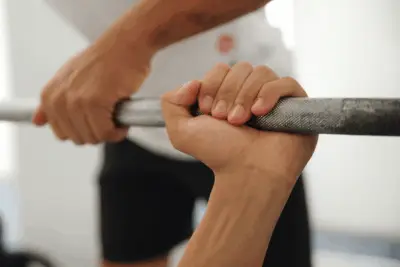
Understanding Grip Strength Training Fundamentals
Grip strength training encompasses much more than squeezing stress balls or using hand grippers purchased at sporting goods stores. Three distinct types of grip strength work together to create complete hand and forearm development. Crushing grip involves squeezing objects between your fingers and palm, the type most people associate with handshake strength and holding heavy dumbbells. Pinch grip requires thumb opposition against your fingers, essential for carrying objects by their edges or climbing activities popular at local facilities. Support grip maintains sustained holds of heavy objects, crucial for exercises like farmer’s carries and deadlifts performed at fitness centers throughout Carmel.
Each grip type activates different muscle groups and neural pathways throughout your hands, forearms, and upper body. The flexor digitorum profundus and flexor digitorum superficialis control finger flexion, while the flexor pollicis longus manages thumb movement during pinching activities. These muscles work in concert with numerous smaller intrinsic hand muscles that stabilize joints and coordinate complex movements. Understanding these anatomical relationships helps explain why comprehensive grip strength training produces such widespread benefits for overall athletic performance and daily function.
Grip Strength Training Enhances Athletic Performance
Athletes across virtually every sport benefit from enhanced grip capabilities, though the specific applications vary by activity. Golfers throughout Carmel’s many courses discover that improved grip strength translates directly to better club control, increased swing speed, and reduced injury risk in the wrists and forearms. Research published in the Journal of Sports Sciences indicates that grip endurance significantly impacts putting accuracy during the final holes of competitive rounds when fatigue accumulates. Tennis players at local clubs find that stronger hands improve racquet control during extended rallies and reduce the shock transmitted through the arm during powerful serves.
Basketball players competing at Carmel High School and throughout Hamilton County benefit from better ball control, stronger rebounds, and improved shooting consistency when they develop superior grip strength. The connection extends to seemingly unrelated activities like cycling along the Monon Trail, where maintaining handlebar grip during long rides requires substantial forearm endurance. Even swimmers find that hand and forearm strength contributes to better water catch during strokes and improved push-off power during turns. Working with a personal trainer helps identify the specific grip demands of your chosen activities and design targeted training protocols.
Essential Grip Strength Training Exercises
Effective grip development requires progressive exposure to various training stimuli rather than random exercise selection. Dead hangs from a pull-up bar provide an excellent starting point, building basic support grip while simultaneously developing shoulder stability. Begin with bent-arm hangs if straight-arm holds prove too challenging, gradually extending duration as your capacity improves. Farmers carries using heavy dumbbells or kettlebells available at facilities throughout Carmel challenge your entire posterior chain while demanding sustained grip strength under load.
Plate pinches develop crucial thumb strength by requiring you to hold weight plates smooth-side out using only finger and thumb pressure. Start with lighter 10-pound plates and progress to heavier weights or multiple plates as your pinch grip strengthens. Fat bar training, achieved through specialized bars or thick grip attachments, increases the challenge of standard exercises like rows, curls, and presses by expanding the diameter of the implement. This variation forces your hands to work harder while simultaneously reducing stress on elbow and wrist joints.
Towel pull-ups and rows transform ordinary pulling exercises into exceptional grip builders by removing the stable bar and requiring you to maintain your hold on an unstable towel. This variation develops rotational grip strength unavailable through standard exercises. Wrist roller exercises, performed by winding a weight up and down on a rope attached to a handle, build tremendous forearm endurance while allowing precise control over loading and volume.
Programming Grip Strength Training Into Your Routine
Intelligent program design balances grip-specific work with your existing training obligations rather than overwhelming your recovery capacity. Most people achieve excellent results by dedicating 10-15 minutes to focused grip work twice weekly, typically at the end of their regular training sessions. This timing prevents grip fatigue from compromising performance during compound lifts like deadlifts, rows, and pull-ups that depend heavily on hand strength. However, some grip exercises like farmers carries can serve as excellent warm-up activities that prime the nervous system for heavier loading.
Progressive overload remains essential for continued grip strength development, just as it does for any other fitness quality. Increase the challenge by extending hold durations, adding external load, reducing rest periods, or employing more difficult grip positions. A well-designed progression might begin with 20-second dead hangs, advance to 60-second holds, then transition to weighted vest hangs or single-arm variations. Similarly, farmers carries might progress from 40-pound dumbbells for 40 feet to 80-pound dumbbells for 100 feet over several months of consistent training.
Common Grip Training Mistakes to Avoid
Many people sabotage their grip development through predictable errors that limit progress and increase injury risk. Training grip to failure during every session rarely produces optimal results because the small muscles and connective tissues of the hand require substantial recovery time between demanding workouts. Excessive volume accumulation from multiple high-intensity grip sessions weekly often leads to overuse injuries like tendinitis rather than improved performance. Instead, maintain moderate intensity most sessions while occasionally pushing closer to your limits during planned high-effort phases.
Neglecting eccentric (lowering) phases during grip exercises removes valuable training stimulus and neural adaptation opportunities. Control the descent during plate pinches rather than dropping the weight abruptly, and lower yourself slowly during dead hang training rather than simply releasing the bar. These eccentric contractions produce unique adaptations while building exceptional strength through the most vulnerable joint positions. Additionally, many people focus exclusively on flexion-based grip work while ignoring extension exercises that balance muscle development and reduce injury risk. Simple rubber band extensions or specific extensor exercises maintain equilibrium across the forearm musculature.
Grip Strength Training for Injury Prevention
Balanced hand and forearm development provides crucial protection against common overuse injuries affecting active individuals throughout Carmel. Tennis elbow (lateral epicondylitis) and golfer’s elbow (medial epicondylitis) both stem partially from strength imbalances and poor grip endurance during repetitive activities. Progressive grip training addresses these weaknesses directly while building capacity to withstand sport-specific demands. Research in the Journal of Hand Therapy demonstrates that individuals with stronger grip experience lower rates of these painful conditions across various sports and occupational activities.
Wrist stability improves substantially through targeted grip work, reducing injury risk during falls or unexpected loading scenarios common in sports like basketball and soccer played throughout local facilities. The numerous small muscles crossing the wrist joint gain coordination and strength through progressive grip challenges, creating a more robust joint capable of handling multidirectional forces. Carpal tunnel syndrome symptoms often improve with appropriate strengthening exercises that balance the musculature surrounding the median nerve, though anyone experiencing numbness or tingling should consult qualified healthcare professionals before beginning new exercise programs.
Technical Progression and Advanced Methods
Implementing strategic periodization produces superior long-term grip strength gains compared to random training approaches. Begin with an accumulation phase emphasizing moderate loads, higher repetitions, and extended time under tension to build work capacity and connective tissue resilience. This foundation phase might include three sets of 30-45 second dead hangs, farmers carries for 100 feet with moderate weight, and 20 repetitions of various grip implements. Progress to an intensification phase featuring heavier loads, reduced volumes, and more challenging variations like single-arm hangs, heavier farmers carries for shorter distances, and maximum weight plate pinches.
Advanced practitioners incorporate specialized techniques including contrast methods that pair heavy grip work with explosive movements. For example, performing a maximum plate pinch immediately followed by medicine ball slams creates unique neural adaptations through post-activation potentiation. Similarly, heavy farmers carries followed by speed-focused sled pulls enhance both maximum strength and rate of force development. These sophisticated approaches require solid technical foundations and appropriate recovery management to prevent overtraining.
Neural drive optimization through cluster sets allows higher quality work during grip sessions. Instead of performing continuous sets to failure, take brief 10-15 second rest periods within your working set to maintain technique and force production. This approach enables greater total volume at higher intensities compared to traditional straight sets. Accommodating resistance through chains or bands alters the loading curve during exercises like grip rows, maintaining tension throughout the entire range of motion rather than losing challenge at certain positions.
Conclusion
Grip strength training delivers exceptional returns on investment for anyone seeking improved athletic performance, injury resilience, and functional capacity throughout life. The relatively small time commitment required produces disproportionate benefits across countless activities performed daily, from recreational sports popular throughout Carmel to essential tasks requiring confident object manipulation. Developing this foundational strength quality under guidance from qualified professionals ensures proper technique, appropriate progression, and integration with your broader fitness goals. The hands connect your intentions to the physical world, making their strength and endurance crucial for accomplishing virtually any physical task. Whether you pursue competitive athletic goals or simply want to maintain independence and capability as you age, prioritizing grip development within your comprehensive training program provides benefits that extend far beyond the gym.