Stronger Tendons Mean Fewer Injuries.
Tendon Strength Training Builds Injury-Resilient Performance
Most fitness conversations focus on muscle, how to grow it, strengthen it, and recover it. Yet one of the most powerful elements of long-term athletic health often goes overlooked: the tendon. Stronger Tendons Mean Fewer Injuries, allowing your body to absorb force, transfer power, and stay active for years without the setbacks of chronic pain or injury. For professionals between 35 and 60 who want to keep moving well, whether on the Monon Trail, the golf course, or the soccer sidelines, understanding tendon health is transformative.
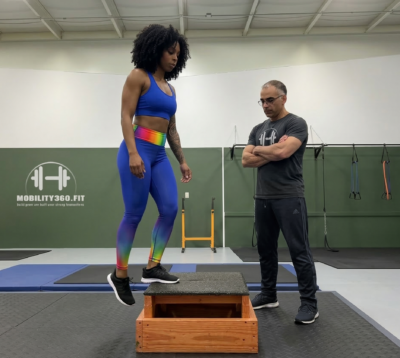
Why Tendons Get Ignored (And Why That Is a Problem)
Tendons are dense, fibrous structures composed primarily of collagen. Unlike muscle tissue, they have a limited blood supply, which means they adapt slowly, and when neglected, they deteriorate quietly over time. Research from the British Journal of Sports Medicine indicates that tendon injuries account for up to 30% of all musculoskeletal complaints seen in clinical practice. The most common culprits in active adults are the Achilles tendon, patellar tendon, rotator cuff tendons, and the common extensor tendon at the elbow.
These are not random failures. They are the predictable outcome of muscles that grow stronger faster than the connective tissue meant to support them. Many training programs do exactly this: they drive muscular development aggressively while giving tendons nothing specific to adapt to. The result is a structural mismatch that shows up as nagging pain near a joint, stiffness in the morning, or that frustrating moment when something that felt fine yesterday suddenly does not. Tendon strength training addresses this imbalance directly.
How Tendons Actually Respond to Load
The Mechanics of Tendon Adaptation
Tendons respond to mechanical loading by stimulating tenocytes, the cells responsible for collagen production, to lay down new, organized collagen fibers. This process is called mechanotransduction, and it requires specific conditions to work well. Studies published in the Journal of Applied Physiology have shown that isometric and slow-velocity isotonic loading protocols produce the most consistent tendon adaptations. Specifically, exercises performed at a cadence of three to four seconds on the lowering phase place significant tensile stress on tendon tissue, triggering collagen synthesis without overwhelming the structure.
The adaptation timeline for tendons is measured in months, not weeks. This is the single most important thing to understand. A client of mine, a 52-year-old attorney who runs regularly, came in frustrated with persistent Achilles stiffness that had been bothering him for nearly a year. He had stretched it, iced it, and rested it. What he had never done was load it properly. Within eight weeks of a structured tendon program, his morning stiffness had dropped significantly, and by week twelve he was back to running without restriction.
What Happens Without Tendon Training
When people train hard without attending to tendon health, a condition called tendinopathy often develops. Unlike acute tears, tendinopathy is a chronic, degenerative process involving disorganized collagen and a loss of normal tendon structure. It shows up as persistent, aching pain near a joint that worsens with activity and can linger for months or even years if handled incorrectly. Research from the British Journal of Sports Medicine suggests that reactive tendinopathy can progress from mild irritation to structural degeneration within weeks of sustained overload. Progressive, intelligent tendon loading builds resilience before problems like this ever arise.
Three Protocols That Actually Work
Isometric Loading for Immediate Pain Relief
Isometric exercises, where the muscle contracts without the joint moving, produce an immediate analgesic effect on irritated tendons. A 2015 study in the British Journal of Sports Medicine demonstrated that a single bout of isometric loading significantly reduced tendon pain in athletes with patellar tendinopathy. For active adults experiencing mild tendon discomfort, isometric holds of 30 to 45 seconds performed at moderate intensity (around 70% of maximum effort) can reduce pain signals while simultaneously maintaining tendon stiffness. This protocol serves as both a therapeutic tool and a bridge to heavier training loads. A qualified personal trainer will assess the appropriate position and intensity for each individual to ensure the loading targets the correct tissue without making things worse.
Slow Eccentric Loading for Long-Term Strengthening
The Alfredson protocol, a series of slow eccentric heel drops performed over the edge of a step, became the gold standard for Achilles tendinopathy rehabilitation after landmark research in the late 1990s. The principle extends far beyond the Achilles. Slow eccentric loading of the quadriceps tendon, rotator cuff tendons, wrist extensors, and hip abductor tendons follows the same biological logic: controlled lengthening under load forces the tendon to remodel toward greater stiffness and tensile strength. Progressions typically begin with bodyweight or light resistance, with tempo held at three to four seconds on the lowering phase, before gradually increasing load over six to twelve weeks as tolerance improves.
Heavy Slow Resistance Training
More recent research has expanded beyond pure eccentric protocols toward what is now called Heavy Slow Resistance training, or HSR. A landmark 2015 randomized controlled trial published in the American Journal of Sports Medicine found that HSR training was equally effective as eccentric training for Achilles tendinopathy and produced superior long-term outcomes and patient satisfaction. HSR uses moderate to heavy loads moved slowly through a full range of motion, typically with a three-second concentric phase, a two-second pause, and a three-second eccentric phase. This approach targets tendon collagen density while simultaneously developing the surrounding musculature, creating a comprehensive strategy that fits naturally into a strength training program.
Try This: The Isometric Wall Sit for Knee Tendon Health
This is one of the most accessible tendon loading exercises and requires no equipment.
Stand with your back against a wall and lower yourself until your thighs are parallel to the floor, or as close as comfortable. Hold that position for 45 seconds at a moderate effort level, roughly 6 or 7 out of 10. Rest for two minutes. Repeat four times. Perform this three times per week, not on consecutive days.
If you feel sharp pain above or below the kneecap, reduce the depth of the squat or the duration of the hold. A mild, dull ache during the hold is normal and usually decreases after the first set. If pain exceeds a four on a ten-point scale or persists more than 24 hours after the session, pull back and consult a personal trainer or physical therapist before continuing.
What Most People Get Wrong
Loading Too Fast, Too Soon
The most frequent error in tendon training is progressing load faster than the tissue can adapt. Muscles may feel capable of handling heavier weights within two to three weeks of training, but tendons lag behind by several months. This mismatch is what creates the window of vulnerability where injuries occur. Over the past 20 years, I have seen this pattern more than any other, and it is almost always preventable with a measured, structured approach.
Skipping the Warm-Up
Tendons are significantly stiffer when cold. A 2017 study in the Scandinavian Journal of Medicine and Science in Sports confirmed that tendon stiffness decreases meaningfully after ten to fifteen minutes of light aerobic activity and dynamic movement. Skipping warm-up before tendon-loading exercises increases the risk of micro-damage that accumulates into chronic tendinopathy over time. Light active recovery after training, gentle cycling, walking, or dynamic stretching, promotes blood flow to the surrounding tissue and supports nutrient delivery to the collagen-producing tenocytes.
Pushing Through the Wrong Kind of Pain
Pain during or after tendon loading that exceeds a three on a ten-point scale, or that persists for more than 24 hours following exercise, indicates that the load was excessive. Many active adults push through tendon discomfort, mistaking it for normal soreness. Unlike muscle soreness, which typically resolves within 48 to 72 hours and does not worsen with repeated sessions, tendinopathy pain tends to accumulate and intensify with continued overload. Monitoring pain responses systematically is one of the most effective tools a skilled personal trainer brings to this process.
Supporting Tendon Health Through Nutrition
Collagen synthesis requires specific nutritional support. Research from the American Journal of Clinical Nutrition demonstrated that consuming 15 grams of hydrolyzed collagen combined with vitamin C approximately 60 minutes before tendon-loading exercise significantly increases collagen synthesis markers in tendon tissue. Vitamin C is an essential cofactor in collagen fiber formation. Adequate protein intake (approximately 1.6 to 2.0 grams per kilogram of body weight per day) supports the broader tissue repair environment. These nutritional strategies are not replacements for progressive loading, but they are powerful complements to a well-structured program.
How to Program Tendon Work Into Your Week
Tendons require 48 to 72 hours between loading sessions for optimal collagen synthesis. Tendon-focused exercises should appear two to three times per week, not daily. Combining heavy tendon loading with high-impact activities in the same session is also inadvisable, particularly for individuals who have experienced previous tendon discomfort. Separating tendon loading days from high-intensity cardiovascular training allows each tissue type to receive the appropriate stimulus without interference.
For golfers dealing with lateral elbow pain, runners experiencing Achilles stiffness, or pickleball players noticing knee discomfort, a targeted tendon loading program can make the difference between months of frustrating limitation and continued, pain-free activity. The goal is not to train through pain. The goal is to load tendons progressively and intelligently so that discomfort never becomes dysfunction.
The Long View on Tendon Training
Tendon strength training for injury-resilient performance is not a short-term intervention. It is a long-term investment in the structural integrity of your body. Research from a 12-week progressive loading study published in the Scandinavian Journal of Medicine and Science in Sports showed that tendon cross-sectional area, stiffness, and elasticity all improved significantly after consistent heavy slow resistance training, and those changes persisted at a 12-month follow-up.
These adaptations translate directly into reduced injury risk, better force transfer during athletic movements, and greater confidence in physical activity. The tendons connecting your calf to your heel, your quadriceps to your kneecap, and your rotator cuff to your shoulder joint are not passive structures. They are dynamic, adaptable tissues that respond powerfully to the right kind of training. When you invest in tendon health, you invest in the ability to do what you love, without interruption.
If you are ready to build a body that holds up as well as it performs, this is exactly the kind of work we focus on at Mobility360.fit. Come find us in Carmel. Your tendons will thank you for years.