Build Stronger Muscles Every Rep
You pick up a dumbbell. You curl it toward your shoulder. That lifting motion, the part where your muscle shortens and works the hardest, is the concentric phase, and it holds the key to building stronger muscles with every rep. Most people rush through it without a second thought. They swing the weight up, let gravity do half the work, and wonder why progress stalls. But when you slow down and control that lifting phase, everything changes.
Over the past 20 years, I have watched hundreds of clients transform their results simply by paying more attention to how they lift, not just what they lift. Concentric training is not a new method or a trend. It is the foundation of every strength exercise you already do. The difference between average results and exceptional results often comes down to whether you are actually controlling the weight on the way up or just getting it from point A to point B.
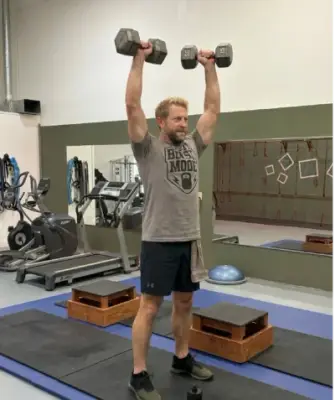
What Happens When You Lift the Weight
Every exercise has two main phases. The concentric phase is the lifting part, where your muscle shortens against resistance. The eccentric phase is the lowering part, where the muscle lengthens while still working. Think of a squat: standing up is concentric, sitting back down is eccentric. A push up follows the same idea. Pressing yourself away from the floor is the concentric portion. Lowering yourself back down is the eccentric.
Here is something most people find surprising. Your muscles can actually handle about 20 to 30 percent more weight during the lowering phase than during the lifting phase. That is why the way up always feels harder. Your body has to recruit more muscle fibers and work harder to produce enough force to move the weight against gravity. When you rush through that phase, you rob yourself of the very stimulus your muscles need to grow and get stronger.
Why Controlled Lifting Changes Everything
A client of mine, Greg, came to the studio frustrated after months of training at a commercial gym with no visible progress. He was lifting respectable weight, but when we watched his form, the problem was obvious. He was using momentum on nearly every exercise. His bicep curls looked more like full body swings. His shoulder presses started with a bounce from his knees.
We stripped the weight back by about 30 percent and focused entirely on controlling the concentric phase. Two seconds up. A brief pause at the top. Three seconds down. Within six weeks, Greg was stronger than before, and he could see the difference in the mirror. Research confirms what Greg experienced firsthand. Controlled concentric contractions can increase muscle activation by up to 35 percent compared to uncontrolled lifting. That is a massive difference from simply slowing down.
The reason is straightforward. When you control the lifting phase, your muscles have to do all the work. There is no momentum to bail you out. Your body responds by recruiting more muscle fibers, and more fibers working means more strength and more growth over time.
How to Apply This to Your Training
You do not need to overhaul your entire program to benefit from concentric training. The exercises you already do, squats, presses, rows, curls, all have a concentric phase you can immediately improve. Here is how to start thinking about it.
For strength, use heavier weights with fewer repetitions, somewhere in the range of four to six reps per set. Focus on a strong, deliberate lift lasting about one to two seconds. The weight should be challenging enough that you could not rush through it even if you wanted to. Rest three to four minutes between sets to let your muscles fully recover before the next effort.
For muscle building, moderate weights with eight to twelve reps work well. Slow the concentric phase to two or three seconds. This extended time under load creates a deep burn that signals your body to adapt. Keep rest periods shorter, around 60 to 90 seconds, to maintain that metabolic demand.
For power and explosiveness, which matters if you play golf, basketball, or tennis around Carmel, use lighter loads moved as fast as possible. Three to five explosive reps with full recovery between sets trains your muscles to produce force quickly. This is what translates to a faster golf swing or a quicker first step on the basketball court.
Try This: The Concentric Pause Squat
Stand with your feet shoulder width apart, holding a dumbbell at your chest or just using bodyweight. Lower yourself into a squat over three seconds. At the bottom, pause for a full second. Then drive up over two seconds, squeezing your legs and glutes the entire way. Pause again at the top for one second before starting the next rep.
Perform three sets of eight repetitions. You will feel the difference immediately compared to regular squats. That pause at the bottom eliminates all momentum, forcing your muscles to generate 100 percent of the force during the concentric phase. If bodyweight feels easy, hold a dumbbell or kettlebell at your chest. If it feels too challenging, reduce the range of motion by squatting to a bench or chair.
Concentric Training for Staying Injury Free
One of the biggest advantages of emphasizing the concentric phase is that it produces less muscle damage than heavy eccentric work. That might sound like a small detail, but it matters enormously for people who need to function well between workouts. A dear friend who trains with me, Patricia, manages a busy medical practice. She cannot afford to be so sore that she struggles to walk between patient rooms. By building her program around controlled concentric work with moderate eccentric demands, she trains consistently three days a week without the debilitating soreness that used to derail her schedule.
This same principle makes concentric focused training valuable during injury recovery. If you are working around a sore shoulder or a cranky knee, your personal trainer can design movements that emphasize the lifting phase through a pain free range of motion while limiting the stress of the lowering phase. This keeps your muscles engaged and progressing without overwhelming tissues that are still healing.
Many of the popular activities around Carmel, from running the Monon Trail to playing a round of golf at one of our many courses, benefit directly from improved concentric strength. Stronger muscles that can produce force efficiently help protect your joints during repetitive movements and reduce your risk of common overuse injuries.
The Speed of Your Lift Matters More Than You Think
Not all concentric contractions are created equal. The speed at which you lift changes what your body gets out of the exercise. Slow lifting, around three to five seconds per rep, maximizes time under load and builds muscular endurance. Moderate speed, one to two seconds, balances strength and size gains. Fast, explosive lifting develops power and quickness.
You do not need fancy equipment to manage this. Simply counting in your head works. A personal trainer can watch your tempo and give you real time feedback, which is especially helpful because most people think they are lifting slowly when they are actually moving much faster than they realize. That outside perspective makes a significant difference in how effectively you train.
The best programs use a mix of speeds across different exercises and training phases. Spending a few weeks focused on slower concentric work, then transitioning to moderate speeds, then incorporating some explosive movements creates well rounded fitness that serves you in daily life and whatever activities you enjoy.
Common Mistakes That Kill Your Concentric Results
The most frequent mistake is using too much weight. When the load is too heavy, your body compensates with momentum, poor form, and contributions from muscles that should not be doing the work. Dropping the weight by 10 to 20 percent and performing clean, controlled concentric reps almost always produces better results than grinding through sloppy heavy sets.
The second mistake is inconsistent tempo. People start a set with perfect two second lifts and by rep six they are heaving the weight up in half a second. Each rep should look and feel the same from first to last. If your tempo falls apart, the set is over regardless of how many reps you had planned.
The third mistake is ignoring compound exercises. Movements like squats, deadlifts, rows, and presses allow you to load more weight and engage more muscle groups during the concentric phase than isolation exercises like curls or lateral raises. Build your program around these bigger movements, then use isolation work to address specific areas that need extra attention.
Making It Work for Your Life
Concentric training is not an advanced technique reserved for athletes. It is the simple practice of controlling the lifting phase of every exercise you do. Whether you are 35 or 70, just starting out or decades into your fitness journey, this focus will make your training more effective and more sustainable.
At Mobility360.fit in Carmel, Indiana, every session starts with this principle. Control the weight. Own every inch of the movement. Build strength that lasts. If you have been training hard but not seeing the results you expected, the answer might not be more weight or more sets. It might simply be slowing down and lifting with intention.