Health-Focused Training After 45
Health-focused training changes everything for people over 45. That stiff lower back that greets you every morning, the knees that protest when you stand up from a chair, the blood pressure numbers that keep creeping up at every checkup. These are not just signs of aging. They are signals that your body needs something specific, and a generic gym membership will not provide it.
Most people in this age group assume that slowing down is the answer. The opposite is true. The body responds to smart, deliberate training at 55 the same way it does at 25. The difference is in the approach.
Why Strength Matters More After 45
After the age of 30, adults lose approximately 3 to 8 percent of muscle mass per decade. After 60, that rate accelerates. The medical term is sarcopenia, and it is responsible for much of the frailty, falls, and loss of independence that people associate with getting older. But sarcopenia is not inevitable. Resistance training reverses it.
A client of mine, Margaret, came to me at 62 after her doctor told her she was losing bone density and muscle mass at a concerning rate. She had never touched a weight in her life. Within eight months of consistent health-focused training, her next DEXA scan showed measurable improvement in both bone density and lean muscle mass. Her doctor called it remarkable. What Margaret did was not remarkable at all. She simply trained with purpose, three days a week, under proper guidance.
Strength training for this population is not about heavy barbells or complicated Olympic lifts. It is about progressive resistance that challenges the muscles enough to trigger adaptation. Goblet squats, dumbbell presses, rows, lunges, and deadlift variations all serve this purpose beautifully when performed with proper form and appropriate load.
Bone Density Responds to Load
Bones are living tissue. They remodel constantly based on the demands placed on them. When you load a bone through resistance training or weight bearing exercise, specialized cells called osteoblasts increase activity and build new bone tissue. Remove that stimulus, and osteoclasts break bone down faster than it gets rebuilt.
The Bone Health and Osteoporosis Foundation estimates that approximately 54 million Americans have low bone density. For women after menopause and men after 70, the risk increases dramatically. The research is unequivocal: resistance training is one of the most effective non pharmaceutical interventions for maintaining and improving bone density.
This is where a qualified personal trainer becomes essential. Not every exercise loads bones effectively, and not every exercise is safe for someone with existing osteopenia or osteoporosis. High impact plyometrics might be appropriate for a healthy 50 year old but dangerous for someone with compression fractures. A personal trainer who understands these distinctions designs programs that build bone without creating risk.
Health focused training protocols for bone density prioritize compound movements that load the spine, hips, and wrists, the three most common fracture sites. Squats, deadlifts, overhead presses, and weighted carries create the mechanical stress that signals bones to strengthen. Over the years, I have seen clients improve their T scores meaningfully through consistent, well designed training programs.
Balance Training Prevents Falls
Falls are the leading cause of injury death among adults over 65, according to the Centers for Disease Control and Prevention. Every year, one in four older adults experiences a fall, and 20 percent of those falls result in serious injuries like hip fractures or head trauma.
Balance is not a fixed trait. It is a skill that degrades without practice and improves with deliberate training. The proprioceptive system, the vestibular system, and the visual system all contribute to balance, and all three can be trained.
Effective balance training starts simple. Single leg stands near a wall for safety, tandem walking, heel to toe along a straight line, and weight shifts from one foot to the other. As competence improves, the challenges increase: unstable surfaces, eyes closed variations, and dynamic movements that require rapid adjustments.
A dear friend who trains with me, Robert, is 68 and came in after a fall that badly bruised his hip. His biggest fear was falling again and breaking something. After six months of structured balance and strength work, Robert moves with a confidence that surprises even him. He hikes the Monon Trail regularly now and recently told me that he feels more stable at 68 than he did at 60.
Managing Blood Pressure Through Exercise
Hypertension affects nearly half of American adults, and the prevalence increases with age. The American College of Sports Medicine has consistently endorsed exercise as a frontline intervention for blood pressure management. Regular aerobic and resistance training can reduce systolic blood pressure by 5 to 7 mmHg, a reduction comparable to some medications.
The mechanism is straightforward. Exercise improves the elasticity of blood vessels, enhances the efficiency of the heart, and reduces peripheral resistance. Consistent health-focused training creates a cardiovascular system that operates under less strain.
For clients managing hypertension, programming requires careful attention. Breath-holding during heavy lifts, known as the Valsalva maneuver, can spike blood pressure dangerously. Proper breathing technique, appropriate load selection, and adequate rest between sets keep training safe and effective. This is another area where working with a knowledgeable personal trainer matters enormously. The difference between a productive session and a dangerous one often comes down to programming details that most people cannot manage on their own.
Training With Type 2 Diabetes
The evidence for exercise as a management tool for type 2 diabetes is overwhelming. Resistance training improves insulin sensitivity by increasing the number of glucose transporters in muscle cells. Muscle tissue acts as a glucose sink, pulling sugar out of the bloodstream more efficiently as it grows. The American Diabetes Association recommends at least 150 minutes of moderate intensity activity per week, including two or more sessions of resistance training.
For clients with diabetes, timing, intensity, and nutrition around training sessions all require attention. Blood glucose can drop during and after exercise, making monitoring important, especially in the early stages of a new program. Health-focused training for diabetic clients often includes a combination of moderate resistance work and sustained aerobic activity, programmed to maximize glucose uptake and insulin sensitivity without creating dangerous blood sugar drops.
The results are real and measurable. Hemoglobin A1C levels commonly decrease by 0.5 to 0.7 percent with consistent training. That reduction translates to significantly lower risk of diabetic complications, including neuropathy, retinopathy, and cardiovascular disease.
Try This: The Foundation Six
This simple routine targets strength, balance, and cardiovascular health in one session. Perform each exercise for the prescribed repetitions, rest 60 seconds between exercises, and complete two rounds.
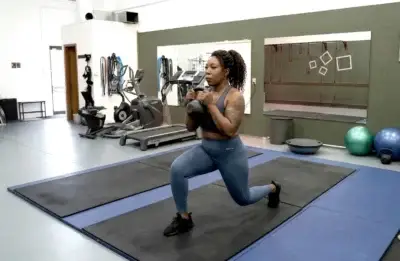
Split Squat with bodyweight or light weight. Step one foot forward and lower your back knee toward the floor while keeping your front shin vertical. This targets each leg independently, builds single leg strength, and challenges balance in a way that bilateral squats cannot.
Goblet Squat with a light dumbbell, 10 repetitions. Hold the weight at your chest, sit your hips back, and keep your chest tall. This loads the spine and hips for bone density while building leg strength.
Single Leg Stand for 30 seconds per side. Stand near a wall for safety. Once comfortable, try closing your eyes for an additional challenge.
Dumbbell Row with one hand supported on a bench, 10 repetitions per side. This strengthens the upper back, improves posture, and loads the wrist and forearm bones.
Wall Push Up progressing to incline push up, 10 repetitions. This loads the wrists and strengthens the chest, shoulders, and triceps without excessive joint stress.
Farmer’s Walk holding a moderate dumbbell in each hand, walk for 30 seconds. This challenges grip strength, core stability, and balance simultaneously while creating excellent bone loading stimulus.
The Value of Professional Guidance
Health-focused training for the 45 to 75 population requires more than good intentions. Medical histories, existing conditions, joint limitations, medication effects, and individual goals all shape what a safe and effective program looks like. A personal trainer with experience in this population understands how to navigate these variables.
At Mobility360.fit in Carmel, Indiana, every training relationship begins with a thorough assessment. Understanding where you are today determines where your training starts and how it progresses. There is no one-size-fits-all program because no two people arrive with the same body, the same history, or the same goals.
If you are over 45 and have been told that aches, stiffness, and declining health numbers are just part of getting older, that is not the whole story. The body is remarkably responsive to the right kind of training at any age. The key is starting smart, staying consistent, and working with someone who understands how to help you move better, feel stronger, and take control of your health for the long term.