Offset Loading Training Develops Asymmetrical Strength
Understanding The Fundamentals
Offset loading training represents a sophisticated approach to strength development that challenges the body’s natural tendency toward symmetry. This training method involves deliberately placing weight on one side of the body while performing exercises, creating an imbalance that forces your core musculature and stabilizing muscles to work harder. Unlike traditional bilateral training where weight is evenly distributed, offset loading training requires your nervous system to adapt to asymmetrical forces, developing functional strength that translates directly to real-world movements. Research from the Journal of Strength and Conditioning Research demonstrates that offset loading can increase core muscle activation by up to 40% compared to traditional loading patterns. For professionals in Carmel, Indiana, who spend significant time in asymmetrical positions at work or during recreational activities, this training approach offers practical benefits that extend beyond the gym environment.
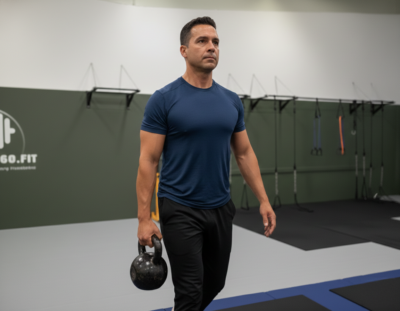
The principle behind offset loading training stems from understanding how the human body naturally compensates for imbalanced loads. When you carry a briefcase in one hand, hold a child on one hip, or reach across your body during daily activities, your core and stabilizing muscles automatically engage to prevent your body from tipping or rotating. By intentionally creating these scenarios in controlled training environments, you can systematically strengthen the muscular and neural pathways responsible for maintaining stability under asymmetrical stress. Personal trainers specializing in functional movement patterns recognize that offset loading bridges the gap between traditional gym exercises and the unpredictable demands of daily life. This training methodology activates stabilizing muscles that often remain dormant during conventional exercises, creating a more comprehensive approach to strength development that improves both performance and injury resilience.
Core Stabilization Through Asymmetrical Loading
The primary benefit of offset loading training lies in its ability to enhance core stabilization through what exercise scientists call “anti-lateral flexion.” When you load one side of your body heavier than the other, your obliques, quadratus lumborum, and deep spinal stabilizers must contract intensely to prevent your torso from side-bending toward the heavier load. This creates a powerful training stimulus that traditional exercises often miss. Studies published in the European Journal of Applied Physiology show that single-arm loaded carries activate the contralateral external oblique up to 45% more than bilateral carries with equivalent total load. The enhanced activation occurs because your nervous system must constantly make micro-adjustments to maintain an upright posture against the asymmetrical pull of gravity on the offset weight.
Furthermore, offset loading training develops what researchers call “reactive core stability,” which differs fundamentally from the type of core strength developed through planks or crunches. Rather than creating stability through static bracing, offset loading requires your core to dynamically respond to changing force vectors as you move through space. This dynamic stabilization more accurately reflects how your core functions during athletic activities and daily tasks. A personal trainer can design progressive offset loading protocols that gradually increase the asymmetry between sides, systematically challenging your stabilization capacity while maintaining proper movement mechanics. For Carmel residents who enjoy activities like golf or tennis, where rotational stability under asymmetrical loading is crucial, this training approach directly enhances sport-specific performance while reducing injury risk.
Movement Pattern Enhancement With Offset Training
Offset loading training fundamentally improves movement quality by exposing and correcting compensatory patterns that develop over years of repetitive activities. When you perform exercises with asymmetrical loading, your body cannot rely on dominant muscle groups to complete movements through momentum or poor mechanics. Instead, every muscle involved in the movement pattern must contribute appropriately to maintain control and stability. Research from the National Strength and Conditioning Association indicates that offset loading can reduce compensatory movement patterns by up to 35% within eight weeks of consistent training. This occurs because the increased stability demand forces your nervous system to recruit muscles in more coordinated, efficient patterns rather than allowing stronger muscles to dominate weaker ones.
The corrective benefits of offset loading training extend particularly to addressing left-right strength imbalances that commonly develop from repetitive work activities or previous injuries. When you perform offset squats, lunges, or presses, the heavier side cannot compensate for weakness on the lighter side because the asymmetrical load prevents the compensatory rotation or lateral shift that typically occurs. This forces both sides of your body to work at their actual capacity rather than allowing one side to dominate. Over time, this approach systematically reduces strength asymmetries while improving overall movement coordination. For professionals who spend long hours in seated positions or performing repetitive tasks, offset loading training provides a structured method for restoring balanced movement capacity and preventing the chronic pain often associated with muscular imbalances.
Progressive Implementation Of Offset Loading Protocols
Implementing offset loading training requires careful progression to ensure safety while maximizing training benefits. Beginning with simple loaded carries provides an ideal entry point, as these exercises require minimal technical skill while delivering substantial training benefits. Start by holding a single kettlebell or dumbbell at your side while walking for 20-30 meters, focusing on maintaining an upright torso without leaning toward or away from the weight. This basic offset carry immediately activates your core stabilizers while providing valuable feedback about your current stability capacity. As your stability improves, progress to overhead offset carries, where holding a weight overhead significantly increases the stabilization challenge by raising the center of mass and increasing the leverage arm against which your core must work.
Advanced offset loading training incorporates asymmetrical loading into compound movements like squats, deadlifts, and presses. Offset goblet squats, where you hold a weight in front of your body but slightly to one side, require intense core stabilization to prevent rotation during the descent and ascent phases. Similarly, offset overhead presses, performed by pressing a weight from one shoulder while holding a lighter weight in the opposite hand at shoulder height, challenge your ability to maintain spinal alignment while generating force through one side. According to research in the Journal of Applied Biomechanics, these complex offset loading patterns increase motor unit recruitment by approximately 25% compared to symmetrical loading with equivalent total weight. A qualified personal trainer can assess your current movement capacity and design offset loading progressions that appropriately challenge your stability while maintaining proper form and preventing excessive compensation patterns that could lead to injury.
Offset Loading For Rotational Power Development
Offset loading training provides unique benefits for developing rotational power, a critical component of athletic performance and functional movement capacity. When you perform exercises like offset lunges or single-arm cable presses, the asymmetrical load creates a rotational torque that your core must resist while simultaneously producing force in the primary movement direction. This combination of rotation resistance and force production closely mimics the demands of activities like throwing, swinging a golf club, or carrying objects while changing direction. Studies from the Journal of Sports Sciences demonstrate that six weeks of offset loading training can improve rotational power output by up to 18% in trained individuals, with particularly significant improvements in the ability to maintain spinal stability during rapid rotational movements.
The rotational stability developed through offset loading training directly translates to improved performance in sports popular among Carmel residents, including golf, tennis, and recreational basketball. In golf, for example, the ability to maintain spinal angle while generating rotational force through the swing depends heavily on anti-rotational core strength developed through exercises like offset loading. Similarly, tennis players benefit from improved stability during the serving motion, where the body must stabilize against significant rotational forces while generating power through one arm. Beyond athletic applications, enhanced rotational stability reduces injury risk during common daily activities like lifting objects from car trunks, carrying children who constantly shift their weight, or performing yard work that requires reaching and rotating simultaneously. These practical benefits make offset loading training particularly valuable for professionals seeking to maintain physical capacity and prevent injury as they balance demanding careers with active lifestyles.
Neurological Adaptations From Asymmetrical Training
The neurological adaptations produced by offset loading training extend beyond simple strength gains to include significant improvements in proprioception, balance, and motor control. When your nervous system must constantly adjust to asymmetrical loading patterns, it develops more refined sensitivity to position, movement, and force production across different muscle groups. Research published in Experimental Brain Research shows that offset loading training increases proprioceptive acuity by approximately 30% within four weeks, as measured by joint position sense tests and postural sway assessments. This improved body awareness translates to better movement control in all activities, from complex athletic movements to simple tasks like walking on uneven surfaces or recovering from trips and slips.
Moreover, offset loading training enhances interhemispheric communication in the brain, improving coordination between the left and right sides of the body. When you perform offset exercises, your brain must process different sensory inputs from each side of your body and coordinate appropriate motor responses to maintain stability and complete the movement effectively. This bilateral coordination challenge stimulates neural pathways that improve overall movement quality and athletic performance. Studies using functional MRI imaging demonstrate increased activation in motor planning regions of the brain during offset loading exercises compared to symmetrical loading patterns. For aging professionals in Carmel, these neurological adaptations provide significant benefits for maintaining functional independence and reducing fall risk, as improved balance and coordination are critical factors in preventing age-related declines in physical capability.
Injury Prevention Through Offset Loading Application
Offset loading training significantly reduces injury risk by preparing your body for the unpredictable, asymmetrical forces encountered in daily life and athletic activities. Most injuries occur not during predictable, symmetrical movements but during unexpected events where loads suddenly shift or your body must rapidly stabilize against unanticipated forces. By regularly training with asymmetrical loads, you develop the reactive stability and strength reserves necessary to handle these challenging situations safely. Research from the American Journal of Sports Medicine indicates that athletes who incorporate offset loading into their training programs experience approximately 35% fewer non-contact injuries compared to those following traditional symmetrical training protocols. This protective effect stems from improved neuromuscular control, enhanced joint stability, and greater strength in the stabilizing muscles that protect vulnerable joints during unexpected movements.
The injury prevention benefits of offset loading training prove particularly valuable for preventing common overuse injuries that plague desk workers and recreational athletes. Chronic lower back pain, often resulting from poor core stability and muscular imbalances, responds remarkably well to offset loading protocols that restore balanced strength and improve stabilization capacity. Similarly, shoulder injuries related to repetitive overhead activities or poor scapular stability benefit from offset pressing and carrying exercises that strengthen the rotator cuff and scapular stabilizers in functional movement patterns. A personal trainer experienced in corrective exercise can identify specific imbalances or weakness patterns that increase your injury risk and design targeted offset loading protocols to address these vulnerabilities. For Carmel professionals who cannot afford extended time away from work due to preventable injuries, investing time in offset loading training provides substantial returns through improved resilience and reduced injury incidence.
Programming Considerations For Offset Loading Training
Effective offset loading training requires thoughtful program design that balances appropriate challenge with adequate recovery and progressive overload. Begin by incorporating offset loading exercises once or twice weekly, allowing your nervous system time to adapt to the novel stabilization demands these exercises create. Unlike traditional strength training where muscular fatigue limits performance, offset loading often produces neural fatigue that requires longer recovery periods. Start with lower intensities, using approximately 50-60% of the weight you would use for bilateral exercises, focusing on maintaining perfect form and controlling the asymmetrical load throughout entire movement ranges. As your stability improves over 4-6 weeks, gradually increase either the weight differential between sides, the total load, or the complexity of movements performed under offset loading conditions.
Advanced offset loading programming incorporates strategic variation in loading patterns, movement planes, and exercise complexity to continue driving adaptations. Alternate between different offset loading strategies, including single-sided loading where one side remains unloaded, proportional offset loading where both sides are loaded but one significantly heavier, and dynamic offset loading where the asymmetry changes during the movement. Research in the Strength and Conditioning Journal suggests that varying offset loading patterns every 3-4 weeks prevents adaptation plateaus while continuing to challenge different aspects of stability and strength. Additionally, consider the interaction between offset loading sessions and other training components, ensuring adequate recovery between high-demand stability work and maximum strength or power training. Working with a qualified personal trainer helps optimize these programming variables based on your specific goals, current capacity, and schedule constraints, ensuring you receive maximum benefit from offset loading training while minimizing injury risk and overtraining.
Technical Execution And Form Guidelines
Proper technical execution during offset loading training is critical for safety and effectiveness. The fundamental principle governing all offset loading exercises is maintaining neutral spinal alignment despite the asymmetrical pull of the load. Before adding weight, practice the movement pattern while focusing on keeping your shoulders level, your ribcage stacked over your pelvis, and your head in neutral position. Many beginners unconsciously lean away from the offset load, which defeats the training purpose by allowing gravity rather than muscular effort to counterbalance the weight. Instead, you should feel your core muscles on the opposite side of the load engaging intensely to prevent side-bending, creating the anti-lateral flexion training effect that makes offset loading so valuable.
Breathing mechanics become especially important during offset loading exercises because proper breathing maintains intra-abdominal pressure that stabilizes your spine against asymmetrical forces. Practice diaphragmatic breathing patterns where you expand your entire torso circumferentially on inhalation, creating 360-degree pressure that supports your spine from all directions. During offset carries, maintain steady breathing rather than holding your breath, as breath-holding increases blood pressure and reduces the sustainability of the exercise. For offset variations of traditional strength exercises like squats or presses, use the same breathing pattern you would employ during bilateral versions, typically inhaling during the eccentric phase and exhaling during the concentric phase. According to biomechanical research from the International Journal of Sports Physical Therapy, proper breathing mechanics can increase spinal stiffness by up to 40% during loaded movements, significantly enhancing both safety and force production capacity. A skilled personal trainer can provide real-time feedback on your breathing patterns and spinal alignment, helping you develop the neuromuscular coordination necessary for safe, effective offset loading training.
Offset Loading Integration With Existing Training Programs
Integrating offset loading training into your existing program requires strategic planning to avoid excessive fatigue while maximizing synergistic benefits. Offset loading exercises work exceptionally well as accessory movements following primary strength work, as the nervous system remains fresh enough to maintain proper form while the stability demand provides a complementary training stimulus to traditional bilateral exercises. For example, after completing bilateral back squats, perform offset goblet squats or single-arm farmer’s carries, which challenge stability and core strength without requiring maximal loads that would interfere with recovery. This sequencing allows you to develop multiple fitness qualities within single training sessions while managing fatigue appropriately.
Alternatively, dedicated offset loading sessions focused entirely on asymmetrical training provide opportunities for concentrated work on stability and movement quality. These specialized sessions typically include various carrying exercises, offset variations of fundamental movement patterns, and unilateral exercises that challenge balance and coordination. Research from the Journal of Human Kinetics suggests that clustering offset loading exercises within dedicated sessions may produce superior improvements in core stability compared to distributing these exercises across multiple traditional strength sessions. For busy professionals in Carmel with limited training time, dedicating one 30-45 minute session weekly to offset loading work provides substantial benefits for core stability, movement quality, and injury prevention while allowing other sessions to focus on traditional strength, cardiovascular fitness, or sport-specific training. A knowledgeable personal trainer can help design an integrated training schedule that incorporates offset loading appropriately based on your schedule, goals, and current fitness level, ensuring all training components work synergistically toward improved performance and health.