Rotational Training Enhances Athletic Power Development
Understanding Rotational Training for Athletic Power Development
Rotational training for athletic power development focuses on strengthening your body’s ability to generate force through twisting and turning movements that mirror real-world athletic demands. This specialized training approach targets the transverse plane of motion, which involves rotation around your body’s vertical axis, enhancing core stability, hip mobility, and torso strength simultaneously. A skilled personal trainer can design rotational training programs that progressively challenge your neuromuscular system, leading to improved athletic performance across numerous sports including golf, tennis, baseball, and martial arts. Research from the Journal of Strength and Conditioning demonstrates that athletes who incorporate rotational training into their routines experience 25-30% improvements in rotational power output within twelve weeks of consistent practice.
The Biomechanics Behind Rotational Power Development
Your body’s ability to generate rotational power depends on the coordinated activation of multiple muscle groups working in a kinetic chain from your feet through your torso. The movement begins with ground reaction forces transmitted through your legs, transfers through your hips and core, and culminates in upper body rotation. This sequential activation pattern, known as the stretch-shortening cycle, allows for maximum power generation when muscles are pre-stretched before rapid contraction. Rotational training for athletic power development specifically targets the deep stabilizing muscles of your core, including the transverse abdominis, multifidus, and internal/external obliques, while simultaneously strengthening the larger prime movers. Understanding this biomechanical sequence enables personal trainers to create training protocols that enhance both the stability and mobility components necessary for explosive rotational movements.
Essential Rotational Training Movement Patterns
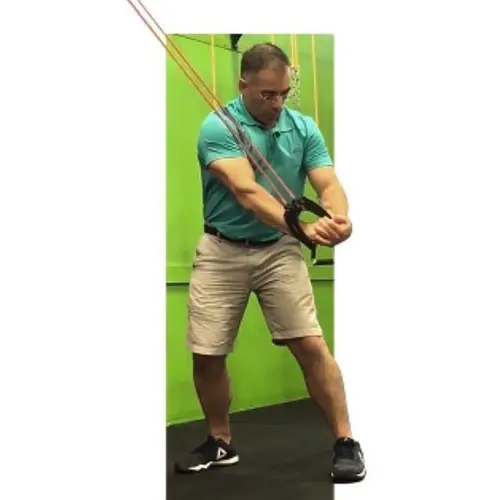
Effective rotational training incorporates fundamental movement patterns that progress from basic stability exercises to dynamic power movements. Anti-rotation exercises like Pallof presses and side planks build foundational core stability by resisting unwanted rotation, establishing the strength base necessary for controlled rotational movements. Rotational training for athletic power development then advances to medicine ball throws, cable wood chops, and landmine rotations that actively produce rotation while maintaining proper alignment. These movements can be performed from various stances including half-kneeling, standing, and single-leg positions to challenge stability while developing power. The progression typically moves from bilateral support to unilateral challenges, adding complexity as your neuromuscular system adapts to the training stimulus.
Progressive Overload Strategies in Rotational Training
Implementing progressive overload in rotational training requires careful attention to multiple variables including resistance, speed of movement, range of motion, and stability challenges. Initially, rotational training for athletic power development emphasizes perfect technique with lighter loads, focusing on proper sequencing and core engagement throughout each movement. As proficiency develops, resistance can be gradually increased through heavier medicine balls, increased cable tension, or additional external loads. Speed progression involves starting with controlled movements and gradually increasing the velocity of execution while maintaining proper form. Advanced practitioners can incorporate reactive elements such as catching and immediately throwing medicine balls or responding to visual cues during rotational movements.
Sports-Specific Applications of Rotational Training
Different sports require specific adaptations of rotational training protocols to maximize transfer to athletic performance. Golf-specific rotational training for athletic power development emphasizes hip-shoulder separation, maintaining spine angle throughout rotation, and generating power from the ground up through proper weight shift. Tennis players benefit from rotational exercises that enhance racquet acceleration while maintaining dynamic balance during directional changes. Baseball and softball athletes require rotational training that develops both batting and throwing power through exercises that emphasize rapid deceleration and acceleration of the torso. A knowledgeable personal trainer can analyze the specific rotational demands of your sport and design training protocols that directly enhance on-field performance.
Integration with Functional Movement Training
Rotational training works synergistically with other functional movement patterns to create comprehensive athletic development programs. The combination of rotational training for athletic power development with unilateral strength exercises enhances the body’s ability to generate and control forces in all three planes of motion. Incorporating balance challenges during rotational exercises further develops proprioception and neuromuscular control essential for athletic performance. This integration approach ensures that rotational power improvements translate effectively to sport-specific movements rather than existing in isolation. Successful programs typically alternate between rotational training sessions and complementary movement patterns to allow for optimal recovery and adaptation.
Common Technique Errors and Corrections
Many athletes make fundamental mistakes during rotational training that limit effectiveness and potentially increase injury risk. Excessive spinal rotation without proper hip mobility often leads to compensatory movements that stress the lower back rather than developing athletic power. Rotational training for athletic power development requires maintaining neutral spinal alignment while allowing the hips and shoulders to create the primary rotational forces. Another common error involves initiating rotation with the arms rather than the core and hips, reducing power generation and limiting the training stimulus to the intended muscle groups. Working with a qualified personal trainer ensures proper technique development and helps identify and correct these movement compensations before they become ingrained patterns.
Technical Considerations for Rotational Power Assessment
Proper assessment of rotational power involves specific testing protocols that measure both the magnitude and quality of rotational force production. The seated medicine ball throw test provides a reliable measure of upper body rotational power by eliminating lower body contribution and isolating torso rotation capacity. Rotational training for athletic power development progress can be tracked through improvements in throwing distance, consistency of technique, and the ability to generate power from various starting positions. Advanced assessment tools like force plates and accelerometers can provide detailed biomechanical feedback regarding ground reaction forces, rate of force development, and movement efficiency throughout the rotational sequence. These measurements allow for precise program adjustments and objective progress monitoring.
Maximizing Athletic Potential Through Rotational Power
Rotational training for athletic power development represents an essential component of comprehensive athletic preparation that directly translates to improved performance across numerous sports and daily activities. The systematic development of rotational strength, power, and control enhances your body’s ability to generate force efficiently while maintaining stability and reducing injury risk. Working with experienced fitness professionals ensures that your rotational training program addresses your specific needs, sport demands, and individual movement patterns. By incorporating progressive rotational exercises into your training routine, you develop the foundational strength and power necessary for athletic excellence while building resilient movement patterns that support long-term physical health and performance longevity.