Shoulder Blade Control Prevents Upper Body Pain
Most people assume that stubborn upper back tension, shoulder discomfort after a long day, or that tightness that never quite goes away no matter how much they stretch are just part of getting older. Shoulder blade control, the ability to move, stabilize, and coordinate the scapulae with precision, is one of the most overlooked pieces of the puzzle. Over the past 20 years, I have worked with hundreds of professionals here in Carmel, Indiana, and this issue shows up constantly, regardless of whether someone is a seasoned gym-goer or someone who has never touched a barbell. Research published in the Journal of Orthopaedic and Sports Physical Therapy confirms that scapular dyskinesis, the technical term for abnormal shoulder blade movement, is directly linked to shoulder impingement, neck pain, and rotator cuff dysfunction. A qualified personal trainer can assess your movement patterns and design a program that specifically targets this often-neglected area.
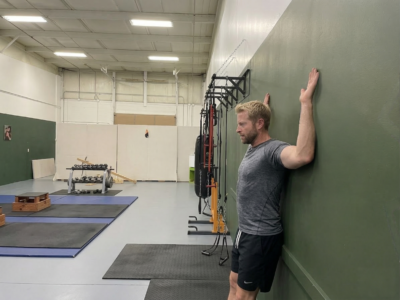
Why the Shoulder Blade Is the Boss of Your Upper Body
Most people think of shoulder pain as a shoulder problem. In reality, the shoulder joint functions as part of a larger chain that begins with the scapulae. The shoulder blade serves as the foundation from which every arm movement originates. When the muscles that control the scapula, including the serratus anterior, lower trapezius, and rhomboids, are weak or poorly coordinated, the entire shoulder complex compensates. Over time, these compensations create movement inefficiencies that produce pain, limit range of motion, and raise the risk of injury. For adults between 40 and 60, this is especially relevant because muscular habits accumulated over decades tend to reinforce poor scapular mechanics. The good news is that targeted training can reverse these patterns, and it tends to happen faster than most people expect.
The Chain Reaction Nobody Talks About
When shoulder blade control breaks down, the consequences reach far beyond the shoulder itself. The cervical spine must work harder to compensate for reduced scapular stability, which is why many people suffering from chronic neck tension actually have a scapular problem at the root. The thoracic spine stiffens as surrounding muscles overwork to provide the stability the scapular muscles should be delivering. Headaches originating from neck tension, reduced grip strength, and even elbow discomfort such as tennis elbow or golfer’s elbow can trace their origins back to compromised shoulder blade mechanics. Treating only the symptom, whether it is the shoulder, neck, or elbow, without addressing the scapular dysfunction beneath it is like mopping up water without turning off the tap.
How Desk Work Quietly Dismantles Your Scapular Control
The Position That Breaks Things Down
Prolonged sitting with arms extended forward, the classic desk posture, places the shoulder blades in a chronically protracted position. In this position, the muscles responsible for retracting and depressing the scapulae become lengthened and weak, while the chest and anterior shoulder muscles shorten and tighten. This muscular imbalance, sometimes called upper crossed syndrome, is remarkably common among professionals who spend eight or more hours daily at a workstation. The result is a forward head posture combined with rounded shoulders and an upper back that struggles to generate the scapular stability needed for pain-free movement. Addressing this does not require hours in the gym. Consistent, targeted work of 15 to 20 minutes done two or three times per week produces real, measurable change.
A client of mine, a software engineer in his mid-40s who came to me complaining of persistent right shoulder aching that his doctor had attributed to “stress and poor posture,” had almost no awareness of his scapular muscles at all. His shoulder blades winged out noticeably when he pressed his arms forward, and his lower trapezius showed almost no activation on basic tests. Within eight weeks of focused scapular training, his shoulder aching had decreased significantly, and more importantly, his posture during long work sessions had improved without him having to think about it consciously.
Every Reaching and Lifting Movement You Do
Shoulder blade control governs virtually every pushing, pulling, reaching, and lifting movement in daily life. Retrieving something from an overhead shelf, pushing open a heavy door, carrying groceries, or simply holding your arms forward to type all require coordinated scapular movement. When that coordination deteriorates, everyday tasks generate cumulative stress on the joints and soft tissues of the upper body. A skilled personal trainer with experience in corrective exercise can identify exactly which movement patterns are creating problems and introduce progressive exercises that restore proper function without aggravating existing discomfort.
The Science Behind Scapular Function
Force Couples and Muscle Coordination
The scapula does not move through a single muscle action. It is governed by force couples, which are pairs and groups of muscles that work together to produce coordinated rotational movement. The upward rotation force couple, for example, involves the upper trapezius, lower trapezius, and serratus anterior working in precise coordination to rotate the shoulder socket upward as the arm elevates. When any component of this system is weak or poorly timed, the entire mechanism becomes dysrhythmic. Studies using electromyographic analysis consistently show that individuals with shoulder pain demonstrate reduced lower trapezius and serratus anterior activation compared to pain-free controls, alongside compensatory overactivation of the upper trapezius and levator scapulae. This imbalance is precisely what a well-designed scapular control program addresses. The American Journal of Sports Medicine has published multiple studies confirming that targeted scapular muscle training significantly reduces shoulder pain and improves functional outcomes across both active and sedentary populations.
Building Real Shoulder Blade Control
Start With Scapular Dissociation
The foundation of shoulder blade control training is teaching the scapulae to move independently of the arms, a concept called scapular dissociation. Simple exercises such as wall slides, scapular pushups, and prone Y-T-W movements train the lower trapezius and serratus anterior to activate and hold positions that support optimal shoulder mechanics. Wall slides involve standing with the back flat against a wall and pressing the arms upward while maintaining full contact throughout the movement. This single exercise challenges the serratus anterior, lower trapezius, and thoracic extensors simultaneously while giving immediate feedback about movement quality. Performing these with proper form matters more than the weight or difficulty level. A certified personal trainer can ensure you are recruiting the correct muscles rather than reinforcing the compensations that created the problem.
Try This: The Wall Slide
Stand with your back, head, and the backs of both arms pressed against a wall. Your elbows should be bent at 90 degrees, like a goalpost position. Slowly slide your arms upward, maintaining contact between the wall and your entire arm from elbow to wrist. Stop if contact breaks, return to start, and repeat. Perform three sets of eight to ten repetitions. If you cannot keep your arms against the wall throughout, it is a strong indicator that your serratus anterior and lower trapezius need attention. This exercise takes about five minutes and can be done before any workout or at your desk during a break.
Progress to Integrated Strength Work
Once foundational scapular control is established, the next phase integrates that control into more demanding movements. Cable rows performed with deliberate emphasis on scapular retraction, single-arm dumbbell rows with controlled blade positioning, and face pulls using a cable machine with a rope attachment all develop the posterior scapular stabilizers within functional patterns. Face pulls deserve particular attention: they simultaneously train scapular retraction, external shoulder rotation, and thoracic extension, addressing three of the most common deficits found in desk-working adults. Research from the Scandinavian Journal of Medicine and Science in Sports supports the use of elastic resistance training for scapular stabilizer development in adults with shoulder dysfunction, making resistance bands an accessible and effective tool for this work.
What Consistent Training Actually Produces
When shoulder blade control improves meaningfully, the changes are both felt and visible. Posture improves naturally as the posterior scapular stabilizers support a more upright thoracic position without conscious effort. Upper back and neck tension decreases as the cervical spine stops compensating for scapular instability. Reaching, lifting, and pressing movements feel smoother and more powerful because the shoulder joint now has a stable base beneath it. Many people also notice a reduction in the frequency and intensity of tension headaches as cervical overload diminishes. A dear friend who trains with me, a dentist in his early 50s, described it simply: “I realized one afternoon that I had made it through a full day of procedures without my neck killing me. That had not happened in years.”
These improvements translate directly into everyday life. Long workdays feel less physically draining. Recreational activities become more enjoyable. The cumulative wear that leads to more serious shoulder pathology is substantially reduced. Shoulder blade control prevents upper body pain not just in the short term, but as a long-term investment in the structural health of your entire upper body.
If this sounds like the piece you have been missing, I would love to talk. At Mobility360.fit in Carmel, Indiana, every program begins with a thorough movement assessment, and for many clients, the shoulder blades are exactly where we start. Reach out and let’s take a look together.